

Defensible space and fire mitigation in Northern Nevada
Defensible space is the managed area around a home where brush, trees and debris are thinned so a wildfire has less to burn. Battle Born Tree Service builds it for homes around Carson City and across Northern Nevada with brush mowing, trimming, thinning and debris removal, following a plan made by our certified arborists.
- 4.8 on Google · 44 reviews
- Best of Carson City 2018-2025
- ISA Certified Arborist WE-11728A
- Fully insured
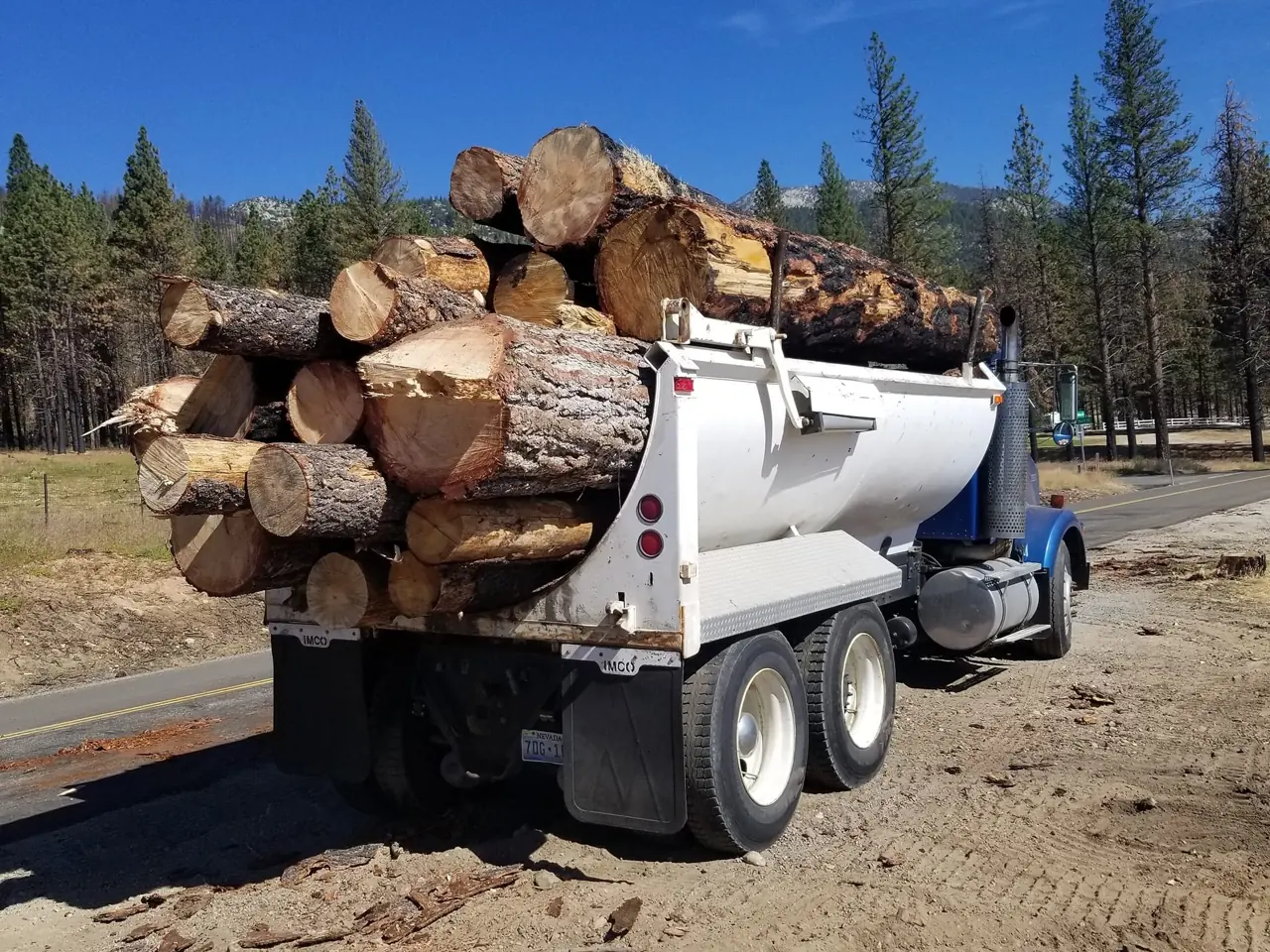
A reality of living in Nevada is the potential for wildfire. In our dry high-desert climate, fire mitigation manages the vegetation so that when a fire breaks out it is easier to contain and does less damage. The work you do around your own property can help preserve your home.
At a glance
- Two certified arborists build the plan with you
- Brush mowing, masticating, limbing up, thinning and debris removal
- Bobcat T870 with brush mower and masticating head
- Work laid out by the Living With Fire zones: 0 to 5, 5 to 30 and 30 to 100 feet
- Homes, large lots, HOAs and commercial sites
- Free estimate
The team spent three days at our house getting our trees ready for fire season. They really were amazing, fast, efficient and cleaned up all the debris.
What is fire mitigation?
Fire mitigation is the process of assessing your house's specific fire risks and removing fire fuel from around the property. The goal is a defensible zone where shrubs, trees and debris are less connected, so fire has a harder time moving from the wildland to the walls.
On the ground it involves brush mowing, trimming, removing debris and judging the health of your trees. It also involves things only you can do, such as where you store firewood and belongings and what the fence, roof and gutters are made of. We handle the vegetation.
What are the three defensible space zones?
The zones used in Nevada come from the University of Nevada, Reno Extension's Living With Fire Defensible Space Guide.
| Zone | Distance from the house | What the guide asks for |
|---|---|---|
| Zone 0, ember-resistant | 0 to 5 feet | Remove woodpiles, wood mulch, junipers, sage, dead leaves, pine needles and weeds |
| Zone 1, lean, clean and green | 5 to 30 feet | Small, separated islands of healthy plants; all dead and flammable debris removed |
| Zone 2, reduced fuel | 30 to 100 feet | No dead vegetation, space between shrubs and trees, ladder fuels removed |
In pine country the guide also says needles on the ground in Zone 2 should not build up deeper than 3 inches. The zones are explained in what is defensible space? and the diagram on this page.
What work do we do in each zone?
Work moves outward from the house: high-hazard shrubs and dead material next to it, dead trees and thinning out to 30 feet, limbing up and brush control out to 100 feet, and mowing or masticating beyond on large lots. The list below covers each zone.
- Next to the house: remove junipers and other high-hazard shrubs, prune branches off the roof, clear dead material. See junipers and other high-hazard plants.
- Out to 30 feet: take out dead trees and shrubs, thin crowded plantings, remove dead wood from the trees that stay.
- Out to 100 feet: limb up trees so ground fire cannot climb, separate shrubs, mow or masticate sagebrush and bitterbrush. See ladder fuels and limbing up.
- Beyond, on large lots: brush mowing, masticating and lot clearing with the Bobcat.
One customer wrote: "The team spent three days at our house getting our trees ready for fire season." (Alane M., Google review)
How high is the wildfire risk here?
High, by national standards. The USDA Forest Service's Wildfire Risk to Communities data ranks risk to homes in Carson City higher than 98.5% of communities in the United States. Virginia City is at 99.4%, Lemmon Valley 99.2%, Dayton 98.9%, Verdi 98.8%, Reno 97.7% and Incline Village 97.7%.
The fire record says the same. Perimeters mapped by the National Interagency Fire Center in our service area include the Waterfall Fire of 2004 at 8,765 acres, the Tamarack Fire of 2021 at 67,054 acres, the Caldor Fire of 2021 at 221,784 acres and the Davis Fire of 2024 at 5,824 acres. Community figures are on our wildfire risk by community page.
Do you need a permit or an inspection?
In Reno, no City permit is needed to prune or remove trees on private property, though HOA rules can still apply. For a free defensible space inspection, the Living With Fire guide says to contact your local fire agency. Several districts also run chipping programs, listed in free defensible space evaluations and chipping programs.
Inside the Tahoe Basin, live trees over 14 inches in diameter need a permit. The Tahoe Regional Planning Agency says tree removal for defensible space can be permitted by your local fire protection agency: the North Lake Tahoe Fire Protection District for Incline Village and Crystal Bay, and the Tahoe Douglas Fire Protection District for the Nevada south shore. The agency decides which trees are marked.
Our main website also has a page on this service: Fire mitigation (main site page).
Sources
- University of Nevada, Reno Extension: Living With Fire Defensible Space Guide (SP-23-07) (read October 1, 2026)
- USDA Forest Service: Wildfire Risk to Communities, data download of April 15, 2026 (read October 1, 2026)
- Tahoe Regional Planning Agency: Trees and Defensible Space (read October 1, 2026)
- National Interagency Fire Center: InterAgency Fire Perimeter History (read October 1, 2026)
What is included
- An assessment of the property's specific fire risks
- Removal of dead trees, dead wood and ladder fuels
- Brush mowing or masticating where machines can work
- Trimming and thinning of trees and shrubs
- Chipping and removal of the debris
Equipment we bring
- 2014 Bobcat T870 track loader
- Brush mower and masticating head
- Chipper and chip truck
- Dump trucks
Talk to the office
| Monday to Friday | 8:30 am - 5:00 pm |
|---|---|
| Saturday and Sunday | Office closed, phones answered |
Phones answered seven days a week. 24-hour emergency service.
Free estimateRelated
Questions about this service
Fire protection districts
- All fire districts
- North Lake Tahoe Fire Protection District
- Tahoe Douglas Fire Protection District
- East Fork Fire Protection District
- Truckee Meadows Fire Protection District
- Carson City Fire Department
- Central Lyon County Fire Protection District
- North Lyon County Fire Protection District
- Storey County Fire Protection District
Living With Fire zones
The three defensible space zones
- Zone 0: 0 to 5 feet. Ember-resistant zone. Nothing that burns against the house: clear dead leaves and needles, move firewood away, cut back branches that touch walls or hang over the roof.
- Zone 1: 5 to 30 feet. Lean, clean and green. Remove dead plants and ladder fuels, limb up trees, and break up continuous shrubs such as junipers.
- Zone 2: 30 to 100 feet. Reduced fuel. Thin crowded trees and brush so fire stays on the ground and slows down. This is where the brush mower and masticator work.
Zones from the University of Nevada, Reno Extension Living With Fire guide (2023). Your fire protection district may set its own rules.
Where we do it
Defensible space and fire mitigation by town
Carson City West Carson City Mound House Reno South Reno Galena and Mt. Rose Highway Caughlin Ranch Northwest Reno and Somersett the North Valleys and Stead Spanish Springs Sun Valley Lemmon Valley Golden Valley Cold Springs Verdi Washoe Valley Palomino Valley Incline Village Crystal Bay Glenbrook Zephyr Cove Kingsbury Round Hill Village Skyland Genoa Johnson Lane Indian Hills Ruhenstroth Topaz Ranch Estates Fish Springs Dayton Virginia City Stagecoach Silver Springs
Straight answers
Defensible space and fire mitigation questions
Still have a question? Call 775.232.8243. Phones are answered seven days a week.
Does Nevada law require 100 feet of defensible space?
The 100-foot figure is the outer edge of Zone 2 in the Living With Fire guide, not a distance written into state statute. Local fire districts adopt their own codes, so ask yours what applies to your address.
When is the best time to do defensible space work?
Before fire season is the common answer, but wildfires can occur in fall and winter too, when plants are dormant and dry. Dead material can be removed at any time.
Do you remove healthy trees for defensible space?
Only where the plan calls for it. Most of the work is brush, dead wood, low limbs and crowded small trees. The arborists explain each recommendation.
Can you leave the chips on site?
Away from the house, often yes. The Living With Fire guide says to keep wood mulch out of the first 5 feet around the home and not to spread it in a continuous layer in Zone 1.
Will defensible space help with my home insurance?
Some carriers ask about it. Your insurer decides. Our guide on home insurance and defensible space explains what they tend to ask for.
Free estimates
Get a free, detailed estimate
A certified arborist looks at the job before any work starts. Tell us what you have and our office will set up a time.
- 4.8 out of 5 on Google from 44 reviews (October 17, 2026)
- Best of Carson City, Best Tree Service, first place 2018 through 2025 (Nevada Appeal readers' poll)
- ISA Certified Arborist WE-11728A on staff
- BBB accredited since 2015, A+ rating
- Carson City based since October 2013
Phones answered seven days a week. 24-hour emergency service.